
The Inclusive Mainstream Fund gives schools a valuable opportunity to take a fresh look at inclusion and think carefully about what will make the biggest difference for pupils. The temptation, understandably, will be to begin with the money: what can we spend it on, which resources do we need, and what can we put in place? The DfE guidance encourages schools to start somewhere more useful. It asks leaders to look closely at the needs of their pupils, identify the barriers they are facing, consider what can be anticipated, and think about where stronger everyday practice or more targeted support is needed.
That is a helpful starting point because it keeps the focus where it should be: on pupils and on what will improve their experience of school. The fund is intended to sit alongside existing school funding, including the notional SEN budget, and to help strengthen inclusive practice across the mainstream offer. In practical terms, this means asking not simply, “What can we buy?” but, “What is getting in the way for our pupils, and what can we do about it?”
What Does the Inclusive Mainstream Fund Mean for Schools?
The central message of the IMF is straightforward: start with barriers, not spending.
Instead of jumping straight to resource allocation, schools are asked to focus on building a robust, high-quality universal offer that identifies and removes learning barriers early. By prioritising “fewer things, done well” schools can create sustainable systems that benefit all pupils while delivering targeted interventions where they are needed most.
Every school is required to publish its Inclusion Strategy by 31st December 2026.
The Department for Education (DfE) suggests keeping this document concise – around 500 words or fewer – and making it publicly accessible on your school website, with an annual review.
How Best to Use the Fund: A 5-Step Strategic Approach
To ensure your IMF funding drives real impact, think of the process much like developing your Pupil Premium strategy. Follow these five key steps:
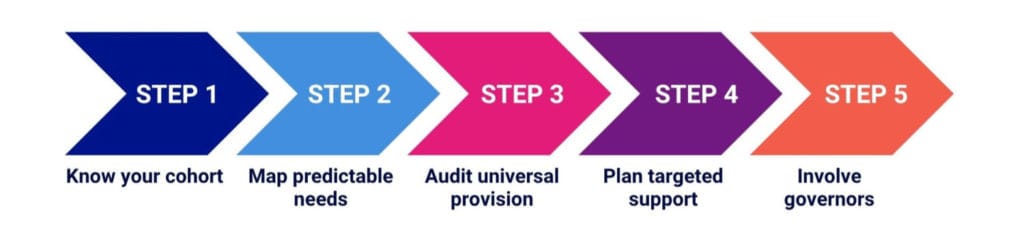
- 1. Know your cohort: Analyse your school data to identify key trends, emerging needs, and specific barriers to learning.
- 2. Map predictable needs: Plan proactively for the types of SEND and learning challenges that routinely arise within your school community.
- 3. Audit universal provision: Evaluate Quality First Teaching across all classrooms to ensure adaptive practices are consistently embedded.
- 4. Plan targeted support: Structure evidence-informed, early interventions that directly address identified barriers.
- 5. Involve governors: Engage your governing body early to ensure strong strategic oversight, accountability, and alignment with whole-school priorities.
Your published inclusion strategy should clearly outline four elements: the Barriers (what gets in the way), the Activity (what you will do), the Investment (what it will cost), and the Outcomes (the measurable difference you expect to see).
Think "pupil premium strategy process"
– not a spending return
How VNET Alignment Supports Your IMF Priorities
At VNET, our provision is directly aligned with the core priorities of the Inclusive Mainstream Fund, ensuring that members have access to expert guidance, masterclasses, and tailored support:
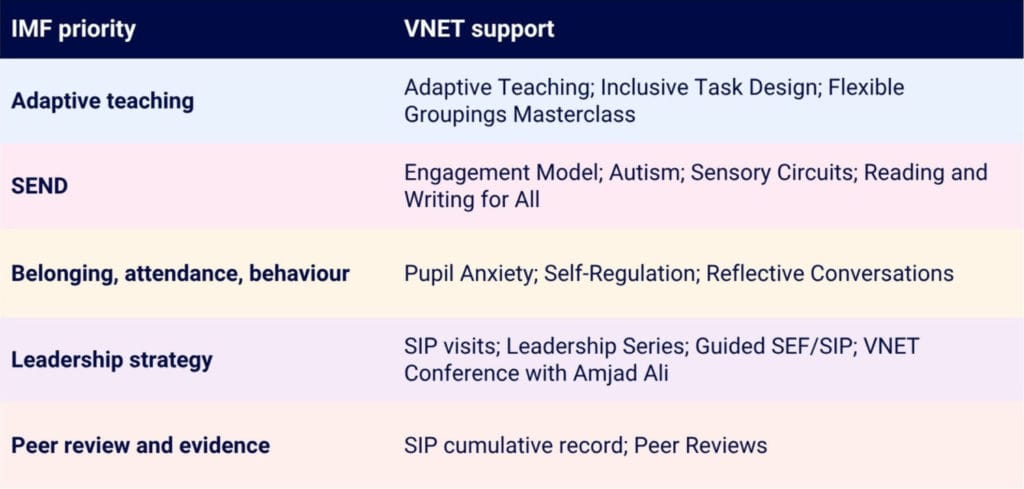
By aligning your IMF strategy with VNET’s targeted professional development and leadership support, you can build a sustainable, inclusive culture where every pupil thrives.
Nania Poulson, VNET Director
- Adaptive Teaching: Enhance classroom practice through masterclasses in Adaptive Teaching, Inclusive Task Design, and Flexible Groupings.
- SEND Expertise: Build internal capacity with targeted training on the Engagement Model, Autism, Sensory Circuits, and Reading and Writing for All.
- Belonging, Attendance and Behaviour: Address root causes of disengagement through specialised sessions on Pupil Anxiety, Self-Regulation, and Reflective Conversations.
- Leadership Strategy & Peer Review: Drive strategic improvement with VNET SIP visits, Guided SEF/SIP support, Peer Reviews, cumulative SIP records, and our upcoming VNET Conference featuring Amjad Ali.